Friday, May 11, 2012

David Kemper-Drums: Highlights

David Kemper, drums
David Kemper was the drummer for the Jerry Garcia Band for longer than anyone else, from July 1983 until December 1993. He played more shows with the Garcia Band than any other drummer, and probably more shows than all of them put together. I believe only John Kahn and Melvin Seals played more shows with Garcia outside of the Grateful Dead. Kemper, born about 1948, was contemporary in age to Bob Weir and Bill Kreutzmann, the younger members of the Grateful Dead. However, in contrast to the Dead's strange oddysey, Kemper went directly to Hollywood studios in 1966, and has been nothing but a successful musician ever since.

David Kemper's story is best told by David Kemper. A legendary interview by Barry Smolin that appeared in 1996 in the magazine Dupree's Diamond News not only tells Kemper's story but gives the best insight into life inside the Jerry Garcia Band. Kemper is witty, nostalgic and clear-eyed all at once. (anyone who hasn't read the interview should do so now).  Kemper summed up his experience in the Jerry Garcia Band with the words "there's something about having a foot on the gas pedal and a foot on the brakes at the same time that's utterly exhausting." Nothing more clearly describes the unique tension of the Jerry Garcia Band than having one foot on the gas and one on the brakes.

Given how well Kemper described his own time with Garcia and how vast his musical experience has been, I thought I would approach my picture of Kemper's drumming differently. When I reviewed the careers of other Garcia drummers, like Paul Humphrey and Gaylord Birch, despite their fantastic musical pedigrees they were just names on the backs of albums--a lot of really great albums, I might add--and building a brief but structured biography made good sense. However, I am going to take a subjective approach with David Kemper, and point out some of his musical contributions that I am aware of. Thus, my post on David Kemper's music will be a few snapshots rather than a continuous movie, but it will give a good picture of the breadth and depth of his music, and it will show how his contributions to the Jerry Garcia Band were not just luck.

The cover of Prisoner In Disguise, Linda Ronstadt's 1976 album on Asylum. David Kemper played drums on the song "Tracks Of My Tears."
"Tracks Of My Tears"-Prisoner In Disguise: Linda Ronstadt (Asylum Records 1975)
David Kemper was born in Chicago in 1947 or '48. His father was an engineer, and Kemper spent most of his youth in Ogden, UT. He learned drums at age 7, and never wanted to do anything else. He was both a member of the school orchestra and in local rock bands, so he was both trained and a rock and roller. In 1966, Kemper graduated High School and just barely escaped the draft. He promptly moved to Hollywood and started working in recording studios. Good drummers are always in demand so he found work immediately, although initially it was on the usual low-level stuff. Although Kemper preferred British Invasion style music to psychedelia, he did see the Grateful Dead somewhere in Los Angeles in 1968, and while he enjoyed them, the details are fuzzy thanks to one Mr. Owsley Stanley.

By the mid-70s, Kemper was a regular drummer for some of the top artists in the record industry. At the time, there was hardly a bigger act than Linda Ronstadt. In particular, Ronstadt was the best selling artist who didn't have her own band. No one "got a call" for an Eric Clapton or Elton John album, as they had their own drummers, but Ronstadt used different musicians on every track. Her sessions paid well and her producers could get any player they wanted. The mere fact that Kemper played on an album like Prisoner In Disguise was a sign of his status in the Los Angeles session player world.

Smokey Robinson's "Tracks Of My Tears" is one of the great pop songs of the 60s. It's a daunting task to cover it in a country style, but Linda Ronstadt pulled it off. Ironically, the record sounds more contemporary today than it did at the time. Most of the popular 'modern country' singers like Faith Hill and Trisha Yearwood are just taller versions of Linda circa the 70s. In her time, however, Linda Ronstadt was too rocked up for Nashville country, yet she had what sounded like an unvarnished throwback sound by the standards of slickly produced 70s rock radio. The twist of switching the narrator from a man (Smokey) to a woman (Linda) added a neat angle to the song.

"Tracks Of My Tears" was the only track on the album that Kemper played on, but the song had a wide impact. Ronstadt's version made the charts in rock (#25), country (#11) and adult contemporary (#4). It is conventional now for country singers, particularly female ones, to have a sort of Motown edge to their ballads, and much of that stems from the success of "Tracks." Of course, most of the credit should go to Linda's fantastic vocal and the powerful yet understated production by Peter Asher, but Kemper's the man behind the band. His easy, soulful drumming keeps the beat going without funking it up and copying the Motown record, a lot harder thing to avoid on a classic than you might think.

David Kemper played drums on the 1975 Atco album Mother Focus
Mother Focus-Focus (Atco Records 1975)
In complete contrast to the spare drumming required for Linda Ronstadt's country rock, shortly afterwards Kemper recorded and toured with the Dutch progressive jazz rock group. I admit I have not heard a Focus album in decades, and at the time I was unaware that Kemper played on Mother Focus, but I am including it here simply to illustrate Kemper's versatility. Focus was a Dutch progressive rock group, playing mostly instrumental jazz-rock, comparable to American groups like Tony Williams Lifetime or Larry Coryell's Foreplay. The musical leaders of the group were guitarist Jan Akkerman and organist Thijs Van Leer, with various players on bass and drums.

Startlingly, the second Focus album (called Focus II or Moving Waves in different countries), released in late 1971, had an AM hit single. A re-edited version of the song "Hocus Pocus" became an international hit in 1972. The song featured Akkerman's melodic guitar riffs contrasted against musical figures played by Van Leer on organ, flute and other instruments, most memorably some playful yodeling, which is what everyone remembers. "Hocus Pocus" was completely unrepresentative of the band, but the song has become a sort of classic, even though no one remembers Focus, and the song is regularly used for soundtracks and commercials (it was the theme for the 2010 Nike World Cup commercial, for example). Thus, a Dutch progressive rock group found themselves touring America and England.

By the time of the sixth Focus album, the band was grinding to a halt. They recorded the album in Los Angeles in mid-1975, and since their drummer (Englishman Colin Allen) had quit, they hired Kemper to play on the album. Thus, relatively soon after he had recorded the spare, tasteful drum parts for Linda Ronstadt's classic Motown cover, Kemper was playing intentionally complex and expansive jazz-rock, although at this time Focus was heading in a funkier direction (as was most jazz at the time). After Atco Records released Mother Focus in October 1975, the band still needed a drummer for an English tour, so they hired Kemper to play on their February 1976 UK Tour. Kemper had liked the band, so he joined for the tour. At the start of the tour, Akkerman abruptly quit. The great French guitarist Philip Catherine filled in, apparently quite well, but that spelled the end for Focus. Kemper returned to the Los Angeles recording studios.

The 1982 Elektra album Television Theme Songs, by Mike Post
Television Theme Songs-Mike Post (Elektra Records-1982)

Mike Post was the best and most prolific composer of iconic television theme songs in the rock music era. The list is endless: "Rockford Files," "Hill Street Blues," "NYPD Blue," "White Shadow" and "Magnum P.I." are the best known, but there were numerous others. I'm not certain if Kemper played on the original recordings, but when Post released an 1982 album of his best known songs, David Kemper was in the credits. I'm not certain whether the album had the same recordings or not--it might have--but in any case Post always used the cream of Los Angeles session men, like Larry Carlton and Ian Underwood, so the fact that Kemper appeared on the record meant he was a Hollywood studio A-lister.

September 26, 1998 Shoreline Amphitheater, Mountain View, CA: Bob Dylan/Van Morrison/Lucinda Williams
Kemper drummed for the Jerry Garcia Band for 10 years, and by the end of his tenure the band regularly headlined 17,000 seat basketball arenas in the Northeast. Yet, as Kemper pointed out, the Garcia Band's existence outside of music industry orthodoxy meant that he got none of the recognition that came with drumming in a star band. Without the recognition, he didn't get the phone calls that freelancers depend on for gigs and recordings. He only got into the JGB because Kahn called a producer and asked "who's hot?" (I suspect the producer was Michael Omartian.) Thus Kemper had no real social connections with the Garcia Band, and since he lived in Southern California and flew in for shows, he never hung out with the band except on the road.

Ironically enough, Kemper did get to hang out with one friend of Jerry's, namely Bob Dylan. Dylan used to visit Garcia backstage on the road, which suggests that the story I heard some decades ago that Dylan used to call up Garcia late at night in the 90s when both were on the road had some truth to it. Although Dylan never came on stage with the Garcia Band--darn it--he must have heard them, since he hired Kemper in 1996, three years after Kemper was mysteriously released from his Garcia Band duties.

Dylan and Van Morrison were touring together in the early fall of 1998. The perpetually difficult Morrison had briefly bailed out on the tour, causing Dylan to add Lucinda Williams, only to have Van Morrison rejoin. The two headliners alternated closing the show, whether to assuage egos or simply to facilitate the load out wasn't clear. In any case, I saw both Bay Area shows. On September 25 at Concord, Van had come on before Dylan and played a stunning set that even Dylan had trouble following. Bob returned the favor the next night at Shoreline, coming on before Van and playing his classic songs with a raving intensity. Dylan had a great band that year, but Kemper was the star that night (the other players were Tony Garnier-bass, Bucky Baxter-pedal steel and Larry Campbell-guitar). Ten years with one foot on the gas and one foot on the brake seems to have been the perfect training to drum behind Bob Dylan. For all the fine work I had seen Kemper do with Garcia, this night with Dylan topped them all.

David Kemper has had an amazing career as a drummer, and as far as I know it's still going strong. I have just selected a few highlights that I was personally aware of, but you can choose your own. I found a list of credits for Kemper on a Bob Dylan site (below), and while I doubt it's complete, its impressive by any standards. Note that Kemper is listed on numerous 'Greatest Hits' type albums, meaning he played on a lot of pop hits, even if he wasn't a full time member of the band. Besides the remarkable history of having drummed 10 years with Jerry Garcia and 6 with Bob Dylan, Kemper has a broad history in popular American rock, country and television music, and he adds to the great tradition of drummers in the Jerry Garcia Band.

An incomplete list of David Kemper session credits
1971 John Stewart               Sunstorm
1974 Kinky Friedman         Kinky Friedman
1974 Cashman, Pistilli & West  Lifesong
1974 Patti Dahlstrom          Your Place or Mine
1974 Michael Omartian        White Horse
1975 Cliff De Young            Cliff De Young
1975 Elkie Brooks                Rich Man's Woman
1975 Randy Edelman            Prime Cuts
1975 Andrew Gold               Andrew Gold
1975 Johnny Rivers              Help Me Rhonda
1975 Johnny Rivers              New Loves and Old Friends
1975 Glen Campbell            Rhinestone Cowboy
1975 Second Chapter of Acts   In the Volume/with Footnotes
1975 Linda Ronstadt           Prisoner in Disguise
1975 Focus                          Mother Focus
1975 Thijs Van Leer           O My Love
1976 Dion                           Streetheart
1976 Keith Christmas         Stories from a Human Zoo
1976 Michel Polnareff        Michel Polnareff
1976 Johnny Rivers            Wild Night
1976 Geoff Muldaur           Motion
1976 Michael Omartian      Adam Again
1976 Deardurff & Joseph    Deardurff and Joseph
1976 Peter Pringle               Peter Pringle
1976 Manhattan Transfer    Coming Out
1977 Bernie Leadon            Natural Progressions
1977 Joan Armatrading       Show Some Emotion
1977 Focus                          Ship of Memories
1977 Rick Cunha                 Moving Pictures
1978 Dane Donohue            Dane Donohue
1979 Allan Clarke                I Wasn't Born Yesterday
1979 Louise Goffin              Kid Blue
1979 Phillips - Macleod       Le Partie Du Cocktail
1979 Whiteface                    Whiteface
1980 Terence Boylan           Suzy
1980 Danny Kortchmar       Innuendo
1980 T-Bone Burnett           Truth Decay
1980 Allan Clarke                The Only One
1981 Chi Coltrane                Silk & Steel
1981 Gary Wright                The Right Place
1982 T-Bone Burnette          Trap Door [EP]
1982 Mike Post                    Television Theme Songs
1983 Leo Kottke                  Time Step
1984 T-Bone Burnette          Behind the Trap Door
1984 America                       Perspective
1985 Stevie Nicks                Rock A Little
1988 Belinda Carlisle          Heaven on Earth
1988 Jerry Garcia                Almost Acoustic
1989 Green on Red             This Time Around
1989 Peter Case           The Man with the Blue Post Modern Fragmented Neo-Traditionalist Guitar
1989  [Soundtrack]             Great Balls of Fire
1989 Matthew Ward           Toward Eternity
1990 John Hiatt                  Stolen Moments
1990 Orleans                      Still the One
1990 Kimm Rogers            Soundtrack of My Life
1991 Second Chapter of Acts   Roar Of Love
1991 Jerry Garcia Band       Jerry Garcia Band
1991 Grass Roots                Anthology: 1965-1975
1991 Stevie Nicks               Timespace: Best of Stevie Nicks
1991 Sam Phillips               Cruel Inventions
1992 David Baerwald         Triage
1992 Belinda Carlisle          Her Greatest Hits
1992 Mitsou                        Mitsou
1993 Chuck Prophet            Balinese Dancer
1993 Steve Young               Switchblades of Love
1995   [Soundtrack]             Boys On the Side
1996 David Cassidy            When I'm a Rock N Roll Star: Collection
1997 Jerry Garcia                How Sweet It Is
1997 Bob Dylan                  Time Out of Mind
1997 Dane Donohue            Dane Donohue
1997 Andrew Gold              Thank You for Being a Friend
1998 Allan Clarke               I Wasn't Born Yesterday
1998 Steve Poltz                 One Left Shoe

Friday, April 27, 2012

June 30, 1972: Memorial Auditorium, Kansas City, KS: NRPS/Kenny Loggins (Friend Of The Devil-slow)

Poster for the New Riders with Loggins and Messina at Memorial Auditorium in Kansas City, MO, June 30, 1972. Note that the billing says 'Kenny Loggins Band with Jim Messina.'
"Friend Of The Devil" was one of most radio friendly songs on American Beauty, and it got a lot of airplay in the early 1970s. Ironically, after the Grateful Dead stopped doing acoustic sets in 1970, the song was played relatively rarely in concert. The sprightly, bluegrass styled tune never really found an electric arrangement that seemed to suit Garcia, and it only popped up once in a while. It was part of the strange mystery of the Dead that they regularly performed cover versions of songs they had never released, like "Big River," while hardly playing one of their best known songs.

Unexpectedly, "Friend Of The Devil" reappeared in a much slower arrangement with the Jerry Garcia Band in the Fall of 1975. Garcia obviously enjoyed singing the song as a ballad, since the arrangement of "Friend Of The Devil" became a regular part of the Grateful Dead's sets from 1976 onwards. Once Garcia found an arrangement he liked, "Friend Of The Devil" became a regular part of Dead and Garcia shows. Sometime in the later '70s, word trickled out somehow that Garcia had tried out the ballad arrangement because he had heard a tape of Kenny Loggins performing the song that way.

Wait, really, Kenny Loggins? Of Loggins and Messina? Pleasant, melodic, AM radio-friendly Loggins and Messina, who sold 15 million-plus records in the 70s? When did Kenny Loggins play "Friend Of The Devil?" And how did Garcia hear the tape? Frankly, who was taping Loggins and Messina in the first place? I was never a big fan of the slow version of "Friend Of The Devil," so I didn't dwell on it too much, but I do recall trying to do some research (which in those pre-internet days consisted of going to Rasputin's Records and reading the backs of albums), but I could find no connection between Kenny Loggins and "Friend Of The Devil," and chalked it up to a lost mystery.

I thought about it recently, however, and considered the fact that the internet changes everything. Does it ever. Within minutes of thinking about it, I was pretty sure I solved the mystery. It turns out that on June 30, 1972, Loggins and Messina opened for the New Riders of The Purple Sage at the Soldiers And Sailors Memorial Auditorium in Kansas City, KS, and no less than Betty Cantor taped Loggins and Messina. Loggins performed "Friend Of The Devil" that night,  and that must be the tape she played for Garcia. That, at least, explains the Garcia part: Betty and Jerry were friends (she used to cut his hair), so while the exact reason that she played him the tape remains unknown, the question of how Garcia heard it seems well answered in my mind. The focus of this post, then, will be some informed speculation of how Betty Cantor came to be taping Loggins and Messina in Kansas City in the first place.

Betty In KC
By 1972, the New Riders Of The Purple Sage were an established touring act. They weren't a big act, really, but they could headline smaller places in areas where they were getting good airplay. I have to assume that Betty Cantor was part of their sound crew for a Midwestern tour, which would account for her presence in Kansas City. At the time, groups like the New Riders would usually hire crew members for a specific tour, rather than having a lot of permanent staff. Now, they might very likely use the same people regularly, but it's more likely that Betty Cantor was a hired hand for a run of shows. Memorial Auditorium was a 3500 seat auditorium that was a regular Midwestern stop on the touring circuit.

I don't think Betty would have ended up in Kansas City with the New Riders unless she was working. Paradoxically, I suspect she had live sound duties with the New Riders, and that may be why we have no Betty Board from the New Riders set on June 30. Betty being Betty, however, I have to suspect that she decided to record Loggins and Messina because she could, since she wouldn't have been working during their set. I listened to a few other Loggins and Messina tapes on Sugarmegs, including some King Biscuit Flower Hour tapes, and Betty's tape is far superior. Since neither Kenny Loggins and Jim Messina had any known social connections to the Grateful Dead, it seems most likely that Betty was just taping for fun, but perhaps she had some kind of heads up from someone that Loggins and Messina were worth preserving.

Kenny Loggins with Jim Messina Sittin' In, released November 1971 on Columbia Records
Loggins And Messina
Kenny Loggins had graduated from San Gabriel High School in California in 1966. As an aspiring musician in Southern California, he had the usual interesting if random experiences: he was in the band Second Helping, who released a few singles, he was in the final version of The Electric Prunes (in 1969), he played with Mike Deasy in Gator Creek, and he wrote songs for other groups, including the Nitty Gritty Dirt Band. By 1970, Loggins had a songwriting contract with ABC/Dunhill, but he wasn't really performing.

Jim Messina, from the Santa Barbara area, had been a musician and a recording engineer. He was working in the studio with the Buffalo Springfield when their bassist quit, and he ended up replacing him. Messina helped complete the Springfield's final record, Last Time Around. Afterwards, Messina formed Poco with Richie Furay, where he mostly played lead guitar. After three fine albums with Poco, however, Messina left the group to become a producer associated with Columbia Records. Messina was introduced to Loggins, and recorded a few demos with him. Loggins was soon signed to Columbia.

Loggins was writing song in a folk style that Messina felt was out of date. Messina proposed to Columbia president Clive Davis that Messina play a larger role in Loggins' first album than just producing it. Since Messina wanted to give the record a richer, more rocking feel, he was going to play a more prominent role anyway. Messina's idea was that he would sit in on Loggins debut, in the manner that veteran jazz artists often guested on the debut records of younger players, in order to draw attention to them. Messina was no rock legend, but he had been in Buffalo Springfield and Poco, and he would draw attention from Rolling Stone and the like. It was a good plan, and the album Kenny Loggins with Jim Messina Sittin' In was released on Columbia in November, 1971.

The album was released without fanfare, but Messina's plan worked. Messina had just enough of a name that FM djs gave the record a listen, and there were some fine tracks on it. FM airplay followed. People who recall the poppy and somewhat maudlin hits of Loggins And Messina may be surprised by their first album. Messina ended up playing a much larger role than he had originally planned, sharing writing and singing credits with Loggins. Some of the songs have a lot of energy to them, particularly the Carribbean flavored "Vahevala" and the bluesy "Same Old Wine (In A Brand New Bottle)." Loggins had a much stronger voice than Messina, whereas Messina's musical skills enveloped Loggins' vocals in a much richer setting. What was intended as a one-time partnership was clearly something much more. As Sittin' In slowly started to attract attention, Loggins and Messina started touring around.

June 30, 1972, Memorial Auditorium, Kansas City, KS: NRPS/Loggins And Messina
The Memorial Auditorium in Kansas City seems to have had a capacity of about 3500. That was a bit big for the New Riders Of The Purple Sage. The Riders had just released their second album, Powerglide, and definitely had a following, but back in '72 they couldn't sell all those tickets yet. Orthodoxy suggested that a complimentary second act with a different audience should be sharing the bill. Per convention at the time, the preferred choice was always someone on the same label as the headliner. Loggins And Messina fit the bill perfectly. Both L&M and NRPS were on Columbia, and while they shared some general territory, as far as country flavored rock and roll, the Riders appealed to friendly dopers, whereas Loggins And Messina were a little more introspective.

At the time, while Loggins And Messina were second on the bill, they would have had a few of their own partisans in the crowd. Also, some more alert fans of the New Riders would have already heard a little about of Loggins And Messina on local FM radio. As a result, Loggins And Messina would not have faced either stony silence or utter indifference that was sometimes the fate of opening acts in the 1970s. The tape bears this out. While it's impossible to tell how many people were in their seats, Loggins And Messina seem to be getting a good reaction from the crowd.

The show begins with Kenny Loggins performing 4 songs, accompanied only by Messina, both on acoustic guitar. Loggins sounds quite comfortable, a harder thing to do than you think when you are opening a show in a 3500 seat auditorium for a rowdy crowd waiting on the New Riders. The show began with "Danny's Song" and "House At Pooh Corner," Loggins' best known songs at the time. "Danny's Song" was what was informally known as an "FM hit"--it got so much airplay that everybody knew the song (and you probably do, too: "Even though we ain't got money/I'm so in love with you honey"). "House At Pooh Corner" was mainly known for the preceding year's hit by the Nitty Gritty Dirt Band (you know that, too: "Winnie The Pooh/doesn't know what to do"), but Loggins had written the song.

In the 1970s, if you were opening for a bigger act, it was often prudent to open with your best known material, so that the audience would think "oh, it's these guys--I know them." After their two big numbers, however, Loggins announces that he's going to try something different, and hopes he'll remember the song, and then performs "Friend Of The Devil." He performs it in a way that seems familiar to us now, but at the time it must have been very surprising. In many ways, this was a gutsy thing to do. "Friend Of The Devil" wasn't a New Riders song, but the connection between the Dead and the Riders was very deep, and in any case John Dawson had co-written the song. It's not typical to see an opening act perform a song tied to the headliner, but Loggins went for it. He sang the song with confidence, which suggests to me that he must have performed it a few times, if only casually for friends.

Loggins And Messina got a huge ovation at the end of the song, and Loggins says "it's a great song!" Pretty rapidly, they bring out the whole band, and rock it up pretty good for the balance of the set. I have to think the New Riders audience--the ones whose memories weren't totally auto-deleted--had a pretty good feeling about Loggins And Messina. The interesting part, however, was that because Betty was taping it, she must have been the one who played it for Jerry Garcia (or at least, she effectively facilitated it). It's to Garcia's credit that he heard a completely different interpretation of his own song, by someone he didn't know,  listened to it on its own terms and adopted it on his own. I'm not a fan of the slow version of "Friend Of The Devil," but it was Garcia's lively mind that made him great, even if the results weren't always to my liking.

Loggins And Messina, released October 1972 on Columbia Records
Aftermath
Loggins and Messina were a kind of accidental duo. Messina was Loggins' producer, and he was only supposed to 'sit in' for the first album. However, after the success of the debut, the second album was just called Loggins And Messina. It was released in October of '72, It spawned the huge hit "Your Mama Don't Dance," and there was no turning back. The accidental duo of Loggins And Messina sold over 15 million albums in about 7 years, and were a massive touring act as well. Around 1976, however, Loggins and Messina decided to split up, which they did quite amicably. Loggins, initially the junior member of the partnership, went on to equally spectacular success as a solo artist over the next few decades. Ironically, because the duo split up in their prime, they are more fondly remembered than groups who stayed together well after their sell-by date. In the last several years, Loggins and Messina have reunited for a few recording projects and tours, much to the pleasure of their fans. Their classic songs have remained radio staples ever since they were released.

In retrospect, I think Loggins and Messina's biggest influence was on modern country music. Loggins' songwriting had all the virtues of country music, without the then-mandatory nods to mama, prison and trains. Neither Loggins nor Messina had pronounced southern twangs, and while there was some nice fiddling on some songs, there was never the soapy mixture of steel guitar and strings that make country songs from the 70s sound so dated. Modern country lyrics still namecheck mama, prison and pickups (and, y'know, America), but the modern country sound owes a lot to Loggins and Messina. I don't think it's a coincidence that there are so many popular duos in modern county music.

I don't know of any social connection between Jerry Garcia and either Kenny Loggins or Jim Messina. Poco played a few rock festivals with the Dead, I think, so perhaps Messina bummed a cigarette or something from Garcia, but afterwards I know of no direct connection. In some of the final touring lineups of Loggins And Messina, I know Richard Greene played violin, so there's a little bit of a musical intersection, but by that time Kenny Loggins definitely wasn't performing cover versions to win over the crowd. Yet because of the accidental presence of Betty Cantor, recording an accidental duo who happened to share a record company with the New Riders, Jerry Garcia changed the arrangement of one of his best known songs. While it's remotely possible that "Friend Of The Devil" was performed by Loggins more than once, it seems more likely that Loggins played the song to win over the Riders crowd, and as a result Garcia took his arrangement for his own.

Friday, April 20, 2012

Bob Weir Band>Bobby And The Midnites 1977-84

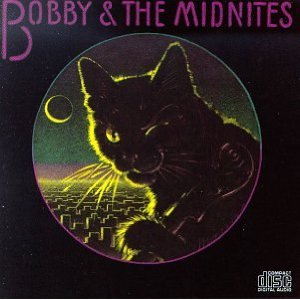
The cover to the Arista album Bobby & The Midnites, released in November 1981
From 1977 to 1984, Grateful Dead guitarist Bob Weir made a conscious effort to be a rock star in the style of Steve Miller of Boz Scaggs. Now, Weir was already a rock star by any standard, but he was cloistered in a peculiar Grateful Dead world. Given that Jerry Garcia had already set out on a singular path for his own solo career, and that Weir already had both a solo album (1972's Ace) and had recorded an album as a member of another group (1976's Kingfish), a 'conventional' rock star solo album was not far-fetched. Weir's album Heaven Help The Fool was produced by Keith Olsen, who had produced the hugely successful 1975 album Fleetwood Mac, as well as the Dead's Terrapin Station. Rather than a detailed discussion of Weir's efforts to be a conventional rock star, this post will focus on the history of the bands Weir formed in support of that effort, the Bob Weir Band and later Bobby And The Midnites, covering most of Weir's non-Dead live appearances from 1978 through 1984.

I originally developed this material for my own research, and felt it would be most productive to share it. The numbering systems for the groups are arbitrary, and only intended to ease discussion in the Comments. Anyone with corrections, insights, additional information or recovered memories (real or imagined) is encouraged to Comment or email me.

The Bob Weir Band
Bob Weir had played Ibanez guitars since about 1975, and Ibanez rep Jeff Hasselberger introduced him to Bobby Cochran in mid-to-late 1977. Cochran was the nephew of famed rocker Eddie Cochran, and he had grown up in Hollywood and the Southern California studio scene. Not only was Cochran an accomplished guitarist, he was comfortable working in an industry context with established veterans. By the end of 1977, among many other projects, Cochran had been a latterday member of John Kay's Steppenwolf, and had also been in the Flying Burrito Brothers. During the period that Cochran was in the Burritos, they changed their name to Sierra and released an album of the same name. That album included the song "I Found Love," which Cochran regularly with both the Bob Weir Band and Bobby And The Midnites.

Some paperwork suggests that the original Bob Weir Band tour was supposed to take place in December 1977, which suggests an earlier planned release date for Heaven Help The Fool. However, since the album was not released until January of 1978, it makes sense that the tour supporting it did not take place until the month after. However, given the Dead's planned touring schedule, the Bob Weir Band must have been put together by Weir and Cochran in the Fall of 1977, probably shortly after November 6, 1977(when the Dead's tour ended in Binghamton, NY). Weir and Cochran probably anticipated going out in December 1977, but in fact they were delayed some months.

The cover to Bob Weir's Arista album Heaven Help The Fool, released in January 1978
Bob Weir Band #1
First show: The Roxy, Los Angeles, CA February 17, 1978
Last show: Nassau Coliseum, Uniondale, New York June 10, 1978
Bobby Cochran-lead guitar, vocals
Bob Weir-guitar, vocals
Brent Mydland-organ, keyboards, vocals
Rick Carlos-bass
John Mauceri-drums
Notes: According to some interviews I read at the time (probably in BAM Magazine), Bob Weir invited David Lindley to join him on his inaugural tour. Weir would likely have known Lindley from the various times that Lindley's 60s band Kaleidoscope had opened for the Grateful Dead. By the late 1970s, Lindley had become well-known as Jackson Browne's chief collaborator. However, the perpetually busy Lindley apparently turned Weir down--darn it--but recommended drummer John Mauceri.

Mauceri was auditioned and hired, and in turn brought in his partner Rick Carlos on bass. The pair had played together in various aggregations. They had backed up the duo Batdorf And Rodney on tour various times, and I had seen them backing up singer/songwriter David Blue in 1973 (along with future Eagle Don Felder). With the rhythm section intact, Carlos recommended his friend Brent Mydland to play organ. Carlos and Mydland had played together since high school, and Mydland had even played with Carlos behind Batdorf and Rodney (albeit not with Mauceri). By 1975, Mydland had ended up in the group Silver with John Batdorf, and they had released an obscure album on Arista.

Once Heaven Help The Fool was released in January 1978, The Bob Weir Band made an essentially traditional national tour in support of it, starting at the most high profile club in the industry, The Roxy in Los Angeles (on February 17, 1978). The band went on to play prestige rock clubs in major cities, and in between they played colleges or mid-sized cities where a winter appearance by any member of the Grateful Dead would always be welcome. In contrast to a typical Jerry Garcia Band tour, where a net profit was mandatory, the Weir Band's record-company supported was more focused on creating "buzz" and encouraging FM radio airplay.

After the national tour ended at the Old Waldorf in San Francisco on March 25, 1978, the Bob Weir Band still managed to sneak in a few high profile bookings. I know they played the Armadillo World Headquarters in Austin, TX on April 27, probably as headliners. They also played two shows opening for Jefferson Starship at Nassau Coliseum on June 9-10, 1978.

Bob Weir Band #2
First show: Rancho Nicasio, Nicasio, CA October 16, 1978
Last show: Paramount Theater  Northwest, Seattle, WA October 28, 1978
Bobby Cochran-lead guitar, vocals
Bob Weir-guitar, vocals
Brent Mydland-organ, keyboards, vocals
Dee Murray-bass
John Mauceri-drums
Although Heaven Help The Fool hadn't become a big hit, Weir hadn't given up. Weir and Cochran organized another brief tour by the Bob Weir Band. Former Elton John Band bassist Dee Murray took over on bass, replacing Rick Carlos. After a few warmup Bay Area gigs, the Bob Weir Band opened three shows for the Jerry Garcia Band in the Pacific Northwest (October 26-28, 1978). As I have discussed elsewhere, these shows were significant because Jerry Garcia got to hear Brent Mydland play and sing, and told Weir "hey, this guy might work." Garcia's reference was to the apparently unspoken concern that Keith and Donna Godchaux's time with the Grateful Dead had run its course. Indeed, a few months later, Mydland got the fateful call from Weir, and by April of 1979 he was a member of the Grateful Dead.

Bobby And The Midnites #0
Golden Bear, Huntington Beach, CA July 30-31, 1980
Bobby Cochran-lead guitar, vocals
Bob Weir-guitar, vocals
Brent Mydland-organ, keyboards, vocals
[uncertain]-bass
[uncertain]-drums
Bob Weir had been playing Ibanez guitars since the mid-70s, and as an Ibanez client he attended the National Association of Music Manufacturers (NAMM) conference in Anaheim, CA in January of 1979. Ibanez had held their own special event at a satellite site, the Knotts Berry Farm amusement park, and various Ibanez clients had performed. Bobby Cochran led an Ibanez All-Star band with bassist Alphonso Johnson and drummer Billy Cobham. They were joined by various guests including Steve Miller and Bob Weir. Weir performed "Minglewood" with Cochran, Johnson, Cobham and others (the dates referenced in this fascinating link are slightly off). There is actually video of Weir's performance, which I have seen, and which is apparently accessible on YouTube.

After the January 1979 Knotts Berry Farm performance, Weir, Cochran, Johnson and Cobham played a Summer NAMM event in Atlanta in either 1979 or 1980, and Weir approached Cochran with the idea of the band which became Bobby And The Midnites, featuring Johnson and Cobham as the rhythm section. However, the busy schedule of the band members meant that it would actually be years before they all got to actually play together. Deadbase IX uncovered a mystery date by Bobby And The Midnites, June 30, 1980, long before any other performance. I have to assume that this low-key show was a "proof of concept" show, for the band members to determine that they were onto something. Other than Weir and Cochran, however, I have no idea who actually played. I suspect that Brent Mydland, Alphonso Johnson and Billy Cobham were in the band that day, but given the peculiar history of the Midnites that is far from certain

[update: based on a poster in the Grateful Dead Archives, it appears that the "Bobby And The Midnites" show that Deadbase found for the Golden Bear was actually on July 30-31, 1980. Interestingly, the band was billed as "Kingfish with special guest Bob Weir, and Bobby Cochran, Tim Bogert and Gregg Errico." So it seems this was some kind of Weir Band/Midnites hybrid. I presume that Matt Kelly was part of the group, and plausibly Brent was along for the ride, too.]

Notwithstanding that both Weir and Cochran were named Bob, Bobby Cochran had been in a fairly successful teenage band called Li'l Willy Gee And The Midniters, so the name 'Midniters' seemed to be an homage to that band.

Bobby And The Midnites #1
First show: The Catalyst, Santa Cruz, CA September 18, 1980
Last show: Freeborn Hall, UC Davis, Davis, CA January 31, 1981
Bobby Cochran-lead guitar, vocals
Bob Weir-guitar, vocals
Matthew Kelly-harmonica, guitar
Brent Mydland-organ, keyboards, vocals
Tim Bogert-bass
Carmine Appice-drums
To Dead fans, Bobby And The Midnites seemingly appeared from nowhere, playing 3 dates in the Bay Area right before the Grateful Dead's Warfield shows. No explanation was offered in the press for what might have been planned, and the idea that Weir, Cochran and Mydland were playing with two members of Vanilla Fudge seemed unfathomable. Of course, there has never been any subsequent explanation, either. As nearly as I can figure out, Weir and Cochran had a concept of Bobby And The Midnites that they had worked out with Alphonso Johnson and Billy Cobham, but conflicting schedules forced them to initiate the Midnites with Bogert and Appice.

Bobby And The Midnites #1 played three club dates in the Bay Area (Sep 18-20, 1980), and then an eight or nine date tour of small theaters in the East Coast (November 1980). There was an encore of six more shows in January of 1981. Bogert and Appice have had such epic careers with the Fudge, Jeff Beck and a Who's Who of rock (not to mention a chance meeting with Don Preston in O'Hare International Airport) that they don't even mention playing with Weir in their various biographies. I have to assume that Bogert and Appice were high-class substitutes until Alphonso Johnson and Billy Cobham were available. Bogert and Appice had been in the band Cactus, who had opened for the Grateful Dead on May 16, 1970, in Philadelphia (Jimi Hendrix was the headliner), but I don't necessarily think that Weir, Bogert and Appice ever made any more than a casual connection at that time.

update: it appears Billy Cobham took over the drum chair after the three Bay Area dates (hat tip Mark)

Bobby And The Midnites #2
Studio only (Bobby And The Midnites album)
Bobby Cochran-lead guitar, vocals
Bob Weir-guitar, vocals
Matthew Kelly-harmonica, guitar
Brent Mydland-organ, keyboards, vocals
Alphonso Johnson-bass
Billy Cobham-drums
Notes: The debut album by Bobby & The Midnites was produced by Gary Lyons for Arista Records. Lyons, the former producer of Foreigner among others, had just finished the Grateful Dead's Go To Heaven album. Weir's previous album had been produced by Keith Olsen, who had just finished Terrapin Station, so clearly the record industry saw plenty of potential in Weir as a rock star. The Midnites album was very well recorded, but I felt it suffered from unimpressive songs. The best song on the album, to my ears--and probably Gary Lyons' ears, since it led off side 1--was "Haze," with six co-writers. "Haze" was written by Weir, Cochran, Mydland, Kelly, Daoud Shaw and Essra Mohawk.

Shaw and Mohawk had been the drummer and backup singer for the Jerry Garcia Band in the Summer of 1981, and I have to suspect that the song came out of some sort of studio jam or rehearsal. Over the years, there was relatively little crossover between Garcia and Weir's extracurricular bands, so "Haze" was a notable exception. Essra Mohawk, an extremely interesting figure, was just a harmony singer for the Garcia Band for about a dozen shows in 1981, but she had a very interesting career as a solo artist and songwriter. I have to think that her contributions, whatever exactly they may have been, were a factor in making "Haze" a good song. I'm not aware, however, that the Midnites ever performed the song "Haze" in concert, and even if they did, they didn't do it very often.

Bobby And The Midnites were announced on the Grateful Dead hotline as performing as part of a large benefit concert for MUSE (an Anti-Nuclear Energy group), on June 14, 1981 at the Los Angeles Forum. Alphonso Johnson was announced as the bassist on the hotline, but I'm not certain whether Billy Cobham or someone else played drums. I assume they played a brief set, but the truth is, I'm not convinced a MUSE Benefit was held at the Forum on June 14 (this subject is kind of esoteric--anyone with any knowledge about this, please put it in the Comments).

Bobby And The Midnites #3
First show: Fox-Warfield Theater, San Francisco, CA January 12, 1982
Last show: Hammersmith Odeon, London, GB February 4, 1983
Bobby Cochran-lead guitar, vocals
Bob Weir-guitar, vocals
Dave Garland-keyboards, tenor sax, vocals
Alphonso Johnson-bass
Billy Cobham-drums
Notes: Bobby And The Midnites made their true stab at stardom starting in January of 1982. It wasn't a bad plan: Bob Weir was a genuine rock star, both Bobbys were good guitarists and handsome to boot, and the rhythm section featured two jazz fusion legends. Weir's peculiar status as a full-time member of the Grateful Dead seemed to suit the other members fine. Cochran had a career as a producer and studio musician, and Cobham and Johnson had plenty of jazz and solo projects to work on. In fact, the profusion of projects of those two may have delayed the 'official' debut of Bobby And The Midnites for some time after the quartet's first jam at the January, 1979 Ibanez NAMM show at Knotts Berry Farm.

Taking over the keyboard slot from Brent was Dave Garland, an experienced studio hand. Garland had also been in the Orange County band Big Foot, who not only released an album but also had opened for the Grateful Dead at Fillmore West back in February, 1970. Garland played keyboards and sang harmonies, and even added a little tenor sax. Matt Kelly had dropped out of the Midnites by this time, presumably more interested in working on his own music with Kingfish.

Bobby And The Midnites were a terrific live band. Although both Cobham and Johnson were great jazz players, they both genuinely enjoyed playing rock music.  Although Cobham had mostly played heavy jazz in the 60s (with Miles Davis, Horace Silver and many others), he had also played the Fillmore East with a fine jazz/rock group called Dreams in 1970, so he was plenty versatile. It was funny to hear guys who had played on Bitches Brew and with Weather Report work it on out to Marty Robbins' "Big Iron," but both Johnson and Cobham liked playing rock, and it showed on stage. 

Nonetheless, despite the charisma and talent of the Midnites, I felt that their material was sub par. There was nothing really wrong with any of their songs, but no number leaped out like Steve Miller's "Fly Like An Eagle" or Dire Straits "Money For Nothing," and the band hardly got any traction beyond Deadheads. Bobby And The Midnites #3 toured hard for about a year, and even had a brief European tour, with three dates (Feb 2-4, 1983) in Paris, Sheffield (Dingwall's) and London, but the album never got any airplay and the band was stuck in smaller places.

Bobby And The Midnites second album, Where The Beat Meets The Street, released on Columbia Records in January 1984
Bobby And The Midnites #4
First show: Keystone Palo Alto, Palo Alto, CA March 22, 1983
Last show: The Rio, Valley Stream, NY September 30, 1984
Bobby Cochran-lead guitar, vocals
Bob Weir-guitar, vocals
Dave Garland-keyboards, tenor sax, vocals
Ken Gradney-bass
Billy Cobham-drums
Notes: Alphonso Johnson left Bobby And The Midnites, but the band went right back out on the road. The Midnites toured as hard as the Jerry Garcia Band, a clear sign that Weir was taking the enterprise seriously. Now, granted, Grateful Dead finances were not great in the early 1980s, so Weir was benefiting from all the touring, but he could probably have made more money touring with less well-known (and thus cheaper) compatriots, so his effort was not inconsiderable.

Johnson's replacement on bass was Ken Gradney, formerly of Little Feat. Gradney was a fine player, but in a more economic, funky style than the jazzy Alphonso. I'm fairly certain that Gradney had been the bassist for Delaney And Bonnie And Friends back when they shared the Festival Express train across Canada with the Dead back in 1970, but I don't know for a fact that Gradney and Weir actually met back then (update: now I do. An alert Commenter pointed out some footage of Gradney and Weir hanging out on the Festival Express. Check out about 1:04 in).  It is interesting to reflect that by the 1980s, even though Weir was filling his band with Los Angeles session pros--Garland and Gradney--they both had opened for the Dead in different contexts over a decade before (as had Tim Bogert and Carmine Appice in Cactus).

As a footnote, although Gradney played on what I consider to be the best Little Feat albums, 1973's Dixie Chicken and 1974's  Feats Don't Fail Me Now, he had replaced original bassist Roy Estrada. Estrada, formerly of The Mothers Of Invention (surely you can all sing along to "Prelude To The Afternoon Of A Sexually Aroused Gas Mask" from Weasels Ripped My Flesh), had played on the Feat's first two albums. This means that Estrada, not Gradney, had played the original part on Lowell George's song "Easy To Slip," recorded by Weir on Heaven Help The Fool and a regular part of the Midnites live shows.

The last iteration of Bobby And The Midnites made another album, the largely forgotten Where The Beat Meets The Street. The album was released in early 1984 on Columbia, which would have been an interesting development had the album been a success. The album was produced by former Doobie Brother Jeff 'Skunk' Baxter, and featured not only the various Midnites, including both Gradney and Alphonso Johnson, but also some Hollywood session guys like Baxter, Brian Setzer (of The Stray Cats) and Steve Cropper. Oddly, Dave Garland is namechecked on the cover as a bnd member, but does not appear on the recording. Although the album featured a healthy dose of original material that the Midnites had been performing for some time, the record sunk like a stone, and even most Deadheads had no idea it was released.

Bobby And The Midnites continued to tour hard throughout 1984, but at a certain point it seemed like they were treading water. Any band featuring a member of the Grateful Dead always had a certain following, and having seen the last configuration of the Midnites twice, I can vouch for the fact that they were a good band. They even continued to play new, unreleased material as they kept touring. At a certain point, however, it was clear that the Midnites were going to remain second tier, and the band quietly ground to a halt in September, 1984. As far as I can tell, all the former members of Bobby And The Midnites remain friends, and there seems to have been various collaborations over the years.

The Bob Weir Band and Bobby And The Midnites were very serious efforts by Weir to do something separate from the Grateful Dead that was both popular and good. Very few professional musicians would play full time in a band as busy as the Grateful Dead and still find the time and energy to make the effort to record and tour with a completely different project over a period of four years. It's ironic, of course, that one of the very few musicians who would do such a thing was also a member of the Grateful Dead, so as a result Weir was constantly compared to Jerry Garcia and found wanting. Weir's not Jerry, but I saw Bobby And The Midnites four times, and they were terrific every time. For a "side project,' that's a rare result anywhere but in the Dead.

By the end of 1984, Weir seemed to have caught Garcia's bug permanently, and he has remained on the road ever since. After Bobby And The Midnites, Weir has never been without a performing entity for long, but the subsequent ensembles will be the subject of future posts. 

Appendix:
Bob Weir And Friends, Perkins Palace, Los Angles, CA March 10, 1983
Bobby Cochran-lead guitar, vocals
Bob Weir-guitar, vocals
Nicky Hopkins-piano
Tim Bogert-bass
Gregg Errico-drums
In 1983, Weir performed at a benefit for Medical Aid To El Salvador. I presume the full compliment of Midnites were not available, so Weir and Cochran used a pick-up band with a former Midnite (Bogert) and two former members of the Jerry Garcia Band (Hopkins and Errico). A tape circulates of this event, mostly consisting of enjoyable rockers.

Friday, April 13, 2012

September 26-27, 1969, The Pavilion, Flushing Meadows Park, Queens, NY (canceled)

An ad from the September 11, 1969 Village Voice (it's in two parts, but it's for the same venue)
I recently came across an ad for a Grateful Dead show that was canceled. In itself, the canceled show is not that big a deal. However, besides my natural desire for completism, the cancellation hints at a whiff of competition between Tri-State Area promoters, and the Grateful Dead's willingness to play them off against each other.

The ad above (in two parts, but it's the same ad) is for forthcoming concerts at The Pavilion at Flushing Meadows Park in Queens. I found the ad at the indispensable blog All The Streets You Crossed, which all 60s and 70s rock historians should be reading religiously. A recent post was on Summer '69 ads for concerts at The Singer Bowl and Flushing Meadows Pavilion in Queens, on the grounds where the 1964 World's Fair had been held. I noticed the ad for the Grateful Dead on September 26 and 27, which was a Friday and Saturday. However, we know that on that weekend, the Grateful Dead co-headlined the Fillmore East with Country Joe And The Fish.

A re-scheduled show, from one Borough to another? Yes, certainly. But I think there's a hint of a lot more of a story here.

Howard Stein And Flushing Meadows
Howard Stein was an important promoter in New York in the 60s and 70s, and he booked the Grateful Dead many times. Among the many venues where he booked the Dead were the Capitol Theater in Port Chester, Gaelic Park in the Bronx and the Academy of Music in Manhattan. Stein competed first with Bill Graham and later with John Scher for bookings from touring groups, not just the Grateful Dead.
The ad for Singer Bowl and Pavilion ad from the June 5, 1969 Village Voice
In the Summer of 1969, Howard Stein was booking both the Singer Bowl and The Pavilion, in Flushing Meadows Park in Queens. The park had been the site of the New York World's Fair in 1964, and subsequently became the site of Shea Stadium, home of the New York Mets (and for some time, the Jets as well). The Singer Bowl was the larger venue. You can see from the ad above that concerts at the Singer Bowl and the Pavilion did not directly conflict. The Grateful Dead had headlined a July 11-12, 1969 weekend at the Pavilion for Stein, supported by Joe Cocker And The Grease Band and Tribe. I believe the Pavilion shows were where Steve Parrish met the Grateful Dead.

Thus it does not seem surprising that since the Grateful Dead played early in the Summer for Howard Stein, they were booked for a return visit at the season's end, on the weekend of September 26-27. Yet the Dead ended up playing the Fillmore East with Country Joe And The Fish. My vague recollection is that the Dead were a late addition at the Fillmore East, replacing Mountain, but I could have it backwards--perhaps Country Joe And The Fish replaced Mountain. In any case, there seems to have been a change in plans. The Dead were planning to be in New York, but they ended up at Fillmore East rather than Flushing.

While I don't doubt that no one who might know the story has any interest in recounting it, I do doubt that this was casual. For all the Grateful Dead members' friendship with Bill Graham, which I believe to have been genuine, they were always willing to play for other promoters in San Francisco. The Dead even started their own ballroom to compete directly with Bill Graham. I can't think that they treated the lucrative New York market any differently.

Howard Stein vs Bill Graham, 1969-71
BGP: February 11-12, 1969 Fillmore East
BGP: June 20-21, 1969 Fillmore East 
     HS: July 11-12, 1969 Pavilion at Flushing
    HS: September 26-27, 1969 Pavilion at Flushing (canceled)
BGP: September 26-27, 1969 Fillmore East
BGP: January 1-2. 1970 Fillmore East
BGP: February 11, 13-14, 1970 Fillmore East
     HS: March 20-21, 1970 Capitol Theater, Port Chester
BGP: May 15, 1970 Fillmore East
     HS: June 24, 1970 Capitol Theater, Port Chester
BGP: July 9-12, 1970 Fillmore East
BGP: September 17-20 Fillmore East
    HS: November 5-8, 1970 Capitol Theater, Port Chester
    HS: February 18-21, 23-24, 1971 Capitol Theater, Port Chester
BGP: April 25-29, 1971 Fillmore East

Stein and Graham were drawing from similar pools of potential fans. Flushing Meadows was just 11 miles from Fillmore East (4/5/6 to the 7, change at Grand Central). Port Chester was a little farther away, up in Westchester County, and outside of the reach of the subway (though not Metro-North). Still, the Capitol was only 30 miles away, and there was plenty of overlap between the Fillmore East and Capitol Theater audience.

There's any number of possible explanations for the Grateful Dead canceling their date with Howard Stein at the Pavilion and playing the Fillmore East instead. I have no ideas of the contracts or expectations of the band, and the entire episode may have simply been a misunderstanding. However, there's no way that the September 26-27 weekend wasn't a serious competitive matter between Bill Graham and Howard Stein. Somewhere there's a story, and I hope we can figure it out at some point.


Friday, April 6, 2012

Lyrics-Robert Hunter/Music-David Freiberg (1972-1975)

Thinking Small: The Long, Strange Trip of the Volkswagen Beetle, by Andrea Holt (2012: Ballantine)
In the English speaking world, one of the pinnacles for a poet, playwright or songwriter is to have their words become part of the language. "To be or not to be" is evoked constantly, even by people who have no idea what Hamlet was trying to decide; Paul Simon, for all his great hits, seems to resonate the most for variations on the chorus of the song "50 Ways To Leave Your Lover." Grateful Dead lyricist Robert Hunter, too,  has passed into the language, with the phrase "what a long strange, trip its been." The phrase is regularly evoked by sportscasters, political pundits and anyone else trying to encapsulate a remarkable story. A current book on the history of the VW Beetle--which looks like a great book, by the way--is entitled Thinking Small: The Long, Strange Trip Of The Volkswagen Beetle (Andrea Hiott, Ballantine Books, 2012). Publishers choose their titles carefully, with marketing considerations foremost in their mind, and the inclusion of Hunter's most famous lyric in the subtitle clearly marks the phrase as a familiar phrase in English, not just to a few Deadheads.

Hunter signed up as the Grateful Dead's house lyricist in September, 1967. He collaborated with most of the members at one time or another, but most famously and most often with Jerry Garcia. Yet in the last two decades, the virtues of Hunter's literate yet singable lyrics have been an asset to a wide variety of recording projects. Since 1990, Hunter has had lengthy, multi-album collaborations with Bob Dylan, David Nelson and Jim Lauderdale. During the same two decades, Hunter has also found the time to write songs with Phil Lesh, Mickey Hart, Zero (the band), Warren Haynes, Malcolm Welbourne (Papa Mali) and others as well. Given Hunter's ability to work with other musicians, and his prolific nature, one of the things I began to ask myself was "why did it take so long?" Why weren't musicians calling up Hunter for some lyrical infusions, back in the day when his friends were headlining auditoriums full of young people, not bars full of old people (even if they were amongst those young people in the first place)?

It's impossible to know why potential collaborators didn't call Hunter back in the day, but a few salient points come to my mind.
  • Back in the day, 'Star' rock bands on big labels released fewer albums, so they needed fewer songs. Hypothetically, bigger money was involved if an album was a hit, and musicians may not have been as inclined to share and potentially lucrative songwriting credits from a (hoped-for) hit album
  • There may have been a notion that Hunter was an effective member of the Grateful Dead, and asking him to help write a song was poaching, in some way. It may have been that Hunter would have been more than willing to co-write songs way back when, but received no inquiries.
  • The stone-age technology of the 60s and 70s would have meant that co-writing would have required that musicians actually spend a fair amount of time with Hunter, time that may not have been easily available for busy, touring rock musicians. We take word processing, emails and digital sound files for granted, but consider the difficulty of trying to collaborate without even being able to copy your lyrics or quickly pass on a recording--however basic--of new chord changes.
I looked into the history of Robert Hunter's collaborations, and it seems that Hunter's earliest regular, non-Dead songwriting partner was David Freiberg. Freiberg had been in Quicksilver Messenger Service from 1965 until 1972, after which he joined the Jefferson Airplane and then the Jefferson Starship until 1981. Hunter wrote the odd song with different musicians in the 70s, but Freiberg seems to be the only non-Dead member with whom Hunter worked with repeatedly. This post will consider what can be discerned about their collaborations, with an eye to seeing how Freiberg and Hunter's professional relationship prefigured the wider series of collaborations that would come in future decades.

The cover to the March, 1969 Quicksilver Messenger Service Capitol album Happy Trails
David Freiberg's Career 1962-1972
In the early 1960s, David Freiberg was a folk singer, mostly performing in the duo David And Michala (I think Michala was his wife, but I'm not certain). I know that at some point around 1964, Freiberg shared a house in Venice Beach with Paul Kantner and David Crosby. David And Michala played on the same folk circuit as Jerry Garcia, Jorma Kaukonen, Janis Joplin and other scuffling bohemian musicians. Given how few in number the pot-smoking bohemian crowd really were, I suspect that Hunter and Freiberg had met up in the early 60s, but I'm not aware that they were particularly close.

In 1965, Freiberg was asked to help form a group to back folksinger Dino Valenti. Valenti got busted, and the band was put on hold. Freiberg got busted, too (set up for a nickel bag pot bust by a snitch), and he spent 60 days in jail.  Freiberg got out to find that the band was still waiting for Valenti, and rehearsing at a tiny club called The Matrix. After many strange permutations, the band evolved into Quicksilver Messenger Service. With Valenti's legal problems making him only occasionally available, Quicksilver became underground legends and Fillmore headliners without him. By the end of 1968, Quicksilver were as big as the Grateful Dead, nationally famous and a tremendous live act. Freiberg played bass and shared lead vocals with guitarist Gary Duncan. John Cipollina shared front-line guitar duties with Duncan, and Greg Elmore anchored the band on drums.

Right before Quicksilver's epic album Happy Trails was released in March, 1969, Valenti returned to action and took away Gary Duncan. After a strange year in limbo, when the band released Shady Grove with Nicky Hopkins as a member of the band, both Valenti and Duncan returned by 1970. Quicksilver, now dominated by Valenti--which, ironically was the original plan--had some success, particularly with the song "Fresh Air." However, the San Francisco era was kind of over, and Quicksilver had crested the wave by 1971, even though they were still a popular touring act. Later in 1971, Freiberg got busted for weed, again, and was briefly returned to jail. When he came out, Quicksilver had replaced him as bassist, since they had dates to fulfill. The talented Freiberg played organ in the band for a few months, but he realized his time in the band had passed, and left Quicksilver. With nothing much to do, Freiberg filled in on bass for the Ace Of Cups at the end of 1971.

The cover of Mickey Hart's 1972 Warner Brothers album Rolling Thunder
Mickey Hart's Barn Studio, Novato
In the 1971 period, with Freiberg stepping away from Quicksilver, he seems to have been taking a break from the touring musician's life, laying low in Marin. Based on what little I can piece together, I think David Freiberg was one of several musicians who liked to hang out at Mickey Hart's ranch. Since Hart's ranch had a studio in the barn, if the guys felt like playing, they could do that, and even preserve it on tape. Some compilation-type tapes endure, possibly versions of Hart's unreleased follow up to Rolling Thunder (rejected by Warner Brothers), and versions of the album The Fish by Barry Melton (re-recorded in Wales).

Many of the musicians who had played on Rolling Thunder were between bands at the time, or not touring much. Gregg Errico had left Sly And The Family Stone, for example, Freiberg had left Quicksilver, and the Airplane never had the urge to tour as relentlessly as the Dead. All these musicians were regulars at Hart's studio during the 1971-74 period, and apparently called themselves the "Area Code 415" band, a reference to the Nashville session man group Area Code 615 (who did the FM classic "Watching TV With The Radio On"). Some Hunter collaborations start to turn up during this period, including the first Hunter/Freiberg song, and a few songs with Mickey Hart as well. This leads me to the conclusion that songwriting collaborations in the 70s required proximity, and I think Hart's ranch was the keystone, the glue that kept a few Marin musicians together on a semi-regular basis.

Jefferson Airplane's 1972 album on RCA/Grunt, 30 Seconds Over Winterland. This was the only Airplane album to feature David Freiberg. It was recorded on the band's final tour in 1972
David Freiberg and The Jefferson Airplane, 1972
By 1972, the Jefferson Airplane usually just found excuses not to tour. By the middle of the year, however, for various reasons they were required to get out on the road to support their album Bark. Bark, among other things, was the Airplane's first album for their own label, Grunt Records, which was financed by RCA. Nonetheless, the Airplane were still very popular, and since they hadn't toured much there was a lot of pent-up interest in seeing them. Unfortunately, Marty Balin had left the band in 1971, and many classic Airplane songs did not work without three-part harmonies. Thus, for their final tour in 1972, Paul Kantner invited his old roommate to join the band, so David Freiberg sang Marty Balin's harmony parts as a member of the Airplane for one tour. Frieberg appeared on the live album from the tour, 30 Seconds Over Winterland.

Since Freiberg was an old friend, talented and a rock star in his own right, he seems to have been made a full-fledged member of the Jefferson Airplane. Of course, by 1973, Jack Casady and Jorma Kaukonen spent all their time speed skating in Scandinavia and touring with Hot Tuna, so the chances of the Airplane actually playing live were pretty small. The Airplane had negotiated the Grunt contract with RCA so that the record company had to pay for unlimited time in Wally Heider's Studio. Now, it's true that the Airplane had those costs deducted from their royalties, so it may not have been a good move for them, but it meant that they could record as much as they wanted to at Wally Heider's and RCA would pay the bills. The famed PERRO Sessions had largely been funded by RCA, and David Freiberg was a regular participant in them. In fact, I suspect that was yet another reason that he could work well with the volatile Airplane crowd.

The odd confluence of hanging out and laying down tracks at Mickey Hart's Barn, for no particular reason, and working at Wally Heider's trying to make hit albums for RCA seems to have rather unexpectedly encouraged the pattern of collaboration between Freiberg and Hunter. Without both of these events, while I'm sure the two would have been friends, they would probably not have made the effort to have a significant working partnership.

The cover of the 1975 'reunion' album on Capitol by Quicksilver Messenger Service, Solid Silver. The album included a recording of the Freiberg/Hunter song "I Heard You Singing," which had been written and recorded for a Mickey Hart project some years earlier
"I Heard You Singing" (Freiberg/Hunter)
Fire On The Mountain-Mickey Hart (unreleased, 1973)
Tales Of The Great Rum Runners-Robert Hunter (Round, 1974)
Solid Silver-Quicksilver Messenger Service (Capitol, 1975)
The earliest collaboration between Robert Hunter and David Freiberg seems to be the song "I Heard You Singing." It's impossible to date exactly, but it does turn up on various tapes that purport to be Hart's proposed follow-up to Rolling Thunder. That seems to point to a late 1972/early 1973 composition. I believe Frieberg sings the song on the Hart recording. Most people, myself included, only became aware of the song when it was included on Hunter's debut album, Tales Of The Great Rum Runners. That album was released in June, 1974, but based on the circulating Hart demos, we know that "I Heard You Singing" dates from much earlier.

Freiberg also recorded a version of the song, on the Quicksilver 'reunion' album Solid Silver, released late in 1975. Although Quicksilver had put out weaker and weaker albums, Duncan and Valenti were still leading a version of the band, and Capitol got Cippolina and Freiberg to rejoin them in the studio, and since Greg Elmore had never left, it was a sort of reunion. Even Nicky Hopkins was there, just to leave no turn unstoned. The magic was gone, however, and while there's nothing wrong with the album, there's nothing notable about it either. I think Freiberg wanted to contribute a good song, but didn't want to use up something he might have been planning for the Jefferson Starship. Recording a three year old song he co-wrote with Hunter seemed to have been a good solution. It's an important point, that I emphasize below, that by the mid-70s it was common if not mandatory for most or all members of a band to get some sort of songwriting credit on each album.  

The cover to the 1973 RCA/Grunt album Baron Von Tollbooth vs The Chrome Nun, credited to Paul Kantner, Grace Slick and David Freiberg
"Harp Tree Lament" (Freiberg/Hunter)
Baron Von Tollbooth vs The Chrome Nun-Paul Kantner, Grace Slick and David Freiberg (RCA/Grunt, 1973)
"Harp Tree Lament" is a largely forgotten Hunter song. I know I have heard it, but I can't for the life of me remember how it goes. Nonetheless, I think it is the critical collaboration in this narrative. An unexpected confluence of events seems to have moved Hunter and Freiberg from making music as friends to an occasional but ongoing professional partnership.

By 1973, the Jefferson Airplane were major rock stars, but they had all but given up on touring. Jack Casady and Jorma Kaukonen had little interest in the Airplane, preferring to tour with Hot Tuna. More importantly, Grace Slick had zero desire to perform, much less tour. The only realistic chance for the band to make money was to record, easily facilitated by the band's contract with RCA. Of course, all the money they spent at Wally Heider's all but assured that the band members would get no cash in return, but the band hadn't fully grasped that yet. Since the Airplane could neither tour nor record without Jack and Jorma, Kantner and Slick worked on duo albums, also covered under the Grunt Records contract with RCA. They had already recorded two fine and modestly successful duo albums, Blows Against The Empire and Sunfighter.

Throughout late 1972 and early 1973, Kantner and Slick worked on a studio album. With Jack and Jorma only occasionally around, the album became a 'duo' record rather than an Airplane album. Numerous other local musicians, most prominently Jerry Garcia, also worked on the sessions (many of them engineered by Betty Cantor). However, Kantner and particularly Grace Slick found it difficult to find enough inspiration to complete the album. The timely arrival of old friend David Freiberg as a member of the Airplane was so productive that Grace and Paul ended up crediting their Baron Von Tollbooth vs The Chrome Nun album to Kantner, Slick and Freiberg. The album was released in May, 1973. The comical title was a reference to the apparently constant war of wills between Kantner and Slick, one of many reasons why working with the Airplane was reputed to be extraordinarily difficult.

From what I can discern, I think Kantner and Slick simply ran out of songs. Freiberg had written a song or two with Quicksilver, but he showed no lyrical flair. The solution must have been plain enough: Freiberg could write music, and he was a fine singer, so if all he needed was lyrics, he had Hunter's phone number. My own assumption is that Hunter and Freiberg had worked together on "I Heard You Singing" at Hart's barn when both of them had nothing to do, and discovered that they could work together. I have to assume that when Freiberg got in touch with Hunter about writing a song for the Tollbooth album, it was based on the idea that they had already seen they could work productively.

To consider how some of the barriers that stood in the way of collaboration in the 1970s didn't apply here, let's review them:
  • Star bands didn't want to give up songwriting credits: when Kantner, Slick, Marty Balin and Jorma were all writing songs for Airplane albums, they didn't need outside writers. But Paul and Grace seem to have run out of songs. They needed to deliver an album to RCA, and couldn't wait for inspiration to strike.
  • Asking Hunter to help write a song was poaching, in some way: the social relationships between bands (or anyone) is very hard to evaluate looking backwards. However, in 1973, the Jefferson Airplane and the Grateful Dead were peers, and Kantner, Slick and Freiberg were old friends and fellow travelers of the Dead. If there might have been social barriers to other artists working with Hunter, they most likely might not have applied to members of the Jefferson Airplane.
  • The stone-age technology of the 60s and 70s would have meant that co-writing would have required that musicians actually spend a fair amount of time with Hunter, time that may not have been easily available for busy, touring rock musicians.This may be a far more important point in retrospect. The Grateful Dead toured relentlessly, of course, but Hunter rarely went on the road. By 1973, the Jefferson Airplane weren't touring either. Since both Hunter and Freiberg lived in Marin County, it would not have been difficult to get together and write a song. I am convinced that Kantner and Slick needed to deliver an album, needed an extra song, and Freiberg and Hunter got together and wrote one.
The cover to Manhole, by Grace Slick, a 1974 album on RCA/Grunt
"It's Only Music" (Freiberg/Hunter)
Manhole-Grace Slick (RCA/Grunt, 1974)
Baron Von Tollbooth was not at all a successful album, by Airplane standards. I think Kantner and Slick were under a lot of pressure to release more 'product,' so a Grace Slick solo album was released in early 1974. Not only did rock critics and the public notice that Manhole was just the same Airplane crowd, it was widely observed that Grace didn't even appear on one song on her own solo album. That song was "It's Only Music," once again a Hunter/Freiberg composition. And once again, I feel certain that they were scratching for songs, and Freiberg called up Hunter and they put something together. Freiberg sings the song, quite nicely, I think, but it's plain from the album that Manhole is just a bunch of tracks, not a 'solo album' of any sort.

The cover to Dragonfly, by Jefferson Starship, released on RCA/Grunt in 1974
"Come To Life" (Freiberg/Stephen Schuster/Hunter)
Dragonfly-Jefferson Starship (RCA/Grunt, 1974)
With Jack and Jorma completely uninterested in touring as members of the Jefferson Airplane, and suffering from serious cash flow problems, Paul Kantner righted the ship in early 1974. An early tour as Jefferson Starship, with Craig Chaquico and Peter Kaukonen on guitars, and Freiberg on bass, showed that the band was still a big concert attraction. With one more personnel change (Pete Sears for Pete Kaukonen), Jefferson Starship recorded their official debut, Dragonfly. It was released in late 1974, and it was a huge success.

The Jefferson Airplane had made boatloads of money, but surprisingly little of it had gotten to the Airplane. They were in litigation with their manager from 1966 until 1985, and many of the royalties from their great 60s hits were still tied up during the 70s. The band had also made the usual rock star mistakes, not least their contract with RCA which insured that the company would recoup recording costs before paying the band. Given the amount of time the Airplane had spent at Wally Heider's, this had to insure that even best selling albums took a long time to generate any cash.

Jefferson Starship changed all that. Not only did the group modulate the Airplane's edgy power into FM-friendly anthems, the band was run on a sound financial basis. The group toured profitably and made sure that everyone had checks to cash from their endeavors. The Starship were lucky enough to get to apply the hard economic lessons of 60s rock to a successful 70s rock band and they all made good money. One of the conscious practices of the Starship was to insure that band members had at least one songwriting credit on each album. When an album hit it big, everyone got paid. Freiberg and Hunter had a song on Dragonfly, written with Steve Schuster, later the saxophonist for the Keith And Donna band. Dragonfly had some songs that got great FM airplay, like "Ride The Tiger" and "Caroline," and the album was a major hit.

The cover to Red Octopus, released on RCA/Grunt in 1975
"Tumblin'" (Marty Balin/Freiberg/Hunter)
Red Octopus-Jefferson Starship (RCA/Grunt, 1975)
The success of Dragonfly was dwarfed by the massive success of Red Octopus, the next Jefferson Starship album. Marty Balin had written and sang the song "Caroline" on Dragonfly, and by Red Octopus, he was back on board full-time. Balin's song "Miracles" outsold every previous Airplane recording, even if it seems trivial now, and the album became huge. Other songs like "Play On Love" were also hits, and the album just didn't stop sellling. Hunter and Freiberg had co-written a song with Marty Balin, so they definitely got their piece of the action. Dragonfly also sold even more records on the basis of "Miracles," so everyone made even more money.

Red Octopus was the gold strike that every band hopes for. Not only was it a huge hit, the band had set up its finances and management in such a way that it was all profitable, and the members were experienced enough not to blow their money this time. I have to assume that Hunter made as much money from "Tumblin'" as he did from any Grateful Dead song. The rewards that came Hunter's way had come from hanging out in Mickey's barn with other out-of-work musicians. I am convinced that Freiberg only called Hunter up to write songs for Airplane projects because Kantner and Slick owed RCA albums and couldn't write songs fast enough. To paraphrase David Nelson, Hunter has always had the ability to serve up songs like hamburgers, and David Freiberg seems to have been the first to realize that new Hunter songs were just a phone call away.

"Nighthawks" (Freiberg/Hunter)
unreleased, 1975
I believe there was one more song by David Freiberg and Robert Hunter, that has been largely lost to history. Before Red Octopus was released, Joel Selvin reported in the San Francisco Chronicle that the name of the next Jefferson Starship would be Nighthawks. He also reported that the title track had been written by Freiberg and Hunter, and implied that the song was already being performed by Jefferson Starship at the time. Of course, tracking Jefferson Starship live shows isn't like the Dead or Bob Dylan, and I have no way of knowing if the song was actually played in concert.

I have a general recollection that the song "Miracles" was a late arrival to the recording sessions, and bumped "Nighthawks." I have been able to find no trace of the song since. After Red Octopus, while the Starship dutifully split songwriting credits, there seemed to be a profusion of writers, so Freiberg didn't call on Hunter again. Although there were numerous personal travails for the members of the Jefferson Starship, the band sold tons of albums in the 1970s, and the band members all largely stopped touring after they left the group, except when they felt like having some fun. David Freiberg left the Starship after 1981, after co-writing another huge hit ("Jane"), and hardly worked again.

David Freiberg was a successful rock musician in the 1960s, but he had little to show for it except  fuzzy memories and some pot busts. He got a second roll of the dice in the 1970s, and he called it right that time. Freiberg, very quietly, seems to have been a guy who stayed ahead of the trend, and he seems to have been the first guy to notice that Jerry Garcia wasn't taking up all of Robert Hunter's time with songwriting. Now of course, it appears--I'm happy to say--that artists from all over get Hunter to contribute to their songs, but David Freiberg was the first. Here's to hoping that there's a recording of Jefferson Starship playing "Nighthawks," appropriately mixed by Jefferson Starship soundman Owsley Stanley, waiting to draw the circle to a close.

Update: 
"Book Of Daniel" (Freiberg/Hunter)
Jack O' Roses-Robert Hunter (Dark Star Records [UK], 1980)
Astute and scholarly reader Jeff points out that I missed a song. On the 1980 Hunter album Jack O'Roses, released and recorded in the UK in 1980, Hunter recorded the song "Book Of Daniel." The song was credited to Hunter and Freiberg. Jeff also points out a February 5, 1980 live performance by Hunter from Kutztown State College (PA) where he introduces the song by saying "here's a song I wrote a few years ago with my friend David Freiberg of Jefferson Starship." While not dating "Book Of Daniel" too precisely, it still puts it squarely in the era of the other songs listed here.